
How to read your energy bill
Understand unit rates, standing charges and meter readings on your bill, check you are charged correctly, and know how to complain if something is wrong.
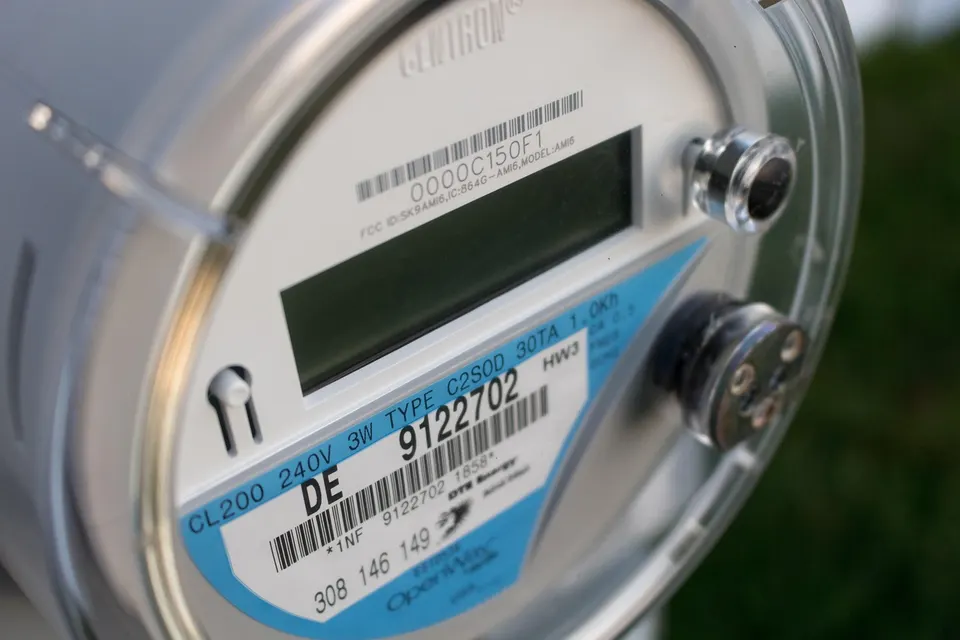
An energy bill packs a lot onto one page, and most people only look at the amount to pay. Ten minutes spent reading the rest can tell you whether you are on the right tariff, whether your readings are real or guessed, and whether you are being charged correctly. This guide takes you through a typical bill line by line, then shows you how to check the sums and what to do if they are wrong.
What every bill should show
Bills look different from supplier to supplier, but the Energy Saving Trust says they should all carry the same core information:
- your name, address and account number
- your supplier's name
- the name and type of each tariff (fixed or variable)
- the unit rate and the daily standing charge
- the amount of energy used in the billing period, in kilowatt hours (kWh)
- your meter serial numbers and the readings used
- a tariff comparison rate, which shows what the tariff would cost a typical customer
- the amount to pay, with a breakdown
Keep a recent bill or a screenshot of your online account somewhere safe. You will need it to compare deals, switch supplier or make a complaint.
The two charges that make up your bill
Unit rate
The unit rate is the price for each kWh of gas or electricity you use. It is shown in pence per kWh. The more you use, the more you pay.
Standing charge
The standing charge is, in the Energy Saving Trust's words, "a fixed daily amount" you pay whatever you use. It covers the cost of keeping you connected. You pay it every day, even if you are away for a month.
Today's capped rates
If you are on a standard variable (default) tariff, Ofgem's price cap limits both charges. For 1 October to 31 December 2026, the average rates for Direct Debit customers in England, Scotland and Wales are:
| Unit rate | Standing charge | |
|---|---|---|
| Electricity | 26.32p per kWh | 54.83p per day |
| Gas | 7.97p per kWh | 29.68p per day |
Your own rates depend on your region and how you pay. One change to watch for: the government has removed VAT from household electricity from 1 October 2026 to 31 March 2027, so electricity lines on this winter's bills should show no VAT. Gas still carries VAT at 5%. If you are on a fixed tariff, your rates are set by your contract instead. Our guide to fixed tariffs and the price cap explains the difference.
What makes up your energy bill
Your bill is two charges: a fixed daily standing charge and a price for each unit you use. Change your usage to see how the split moves.
Uses the average price cap rates for 1 October to 31 December 2026, Direct Debit, England, Scotland and Wales: electricity 26.32p per kWh and 54.83p a day, gas 7.97p per kWh and 29.68p a day. Your region and tariff will differ.
Estimated and actual readings
Your bill is only as accurate as the readings behind it. If you do not send readings, your supplier estimates your use from past data. The Energy Saving Trust notes that estimated readings are often marked "estimated" or with an "E". Estimates can run too high, leaving you in credit, or too low, building up a debt you only discover later.
To keep bills accurate:
- Read your meters on the same day each month, or when your supplier asks.
- Photograph the meter so you have a dated record.
- Submit the reading online, in the app or by phone.
- Check the next bill shows your reading, not an estimate.
Smart meters
A working smart meter sends readings to your supplier automatically, so you should not need to submit them. It is still worth checking the meter display against your bill now and then. If your bill suddenly switches to estimates, the meter may have stopped communicating, and your supplier should look into it.
How to check you are being charged correctly
Work through these steps with your latest bill and your meter readings in front of you.
- Check the details. Your name and address should be right, not "the occupier". The billing dates should fall within the time you have lived there.
- Match the meters. The serial numbers on the bill should match your meters. So should the MPAN (a 12-digit number for electricity) and the MPRN (six to 11 digits for gas), as the Energy Saving Trust explains.
- Work out your use. Take the previous reading from the latest one. For electricity, the difference is your kWh.
- Convert gas to kWh. Gas meters measure volume. Your supplier converts it using a formula your bill should show. For a metric meter, British Gas sets out the formula as cubic metres used, times the calorific value on your bill, times 1.02264, divided by 3.6. An older imperial meter measures cubic feet, so the figure is first multiplied by 0.0283.
- Do the sums. Multiply your kWh by the unit rate, then add the standing charge times the number of days.
A worked example
Say you used 300 kWh of electricity over 30 days on the capped Direct Debit rates above:
- energy: 300 × 26.32p = £78.96
- standing charge: 30 × 54.83p = £16.45
- total: £95.41
If your bill is far from your own sum, look at whether the readings were estimated, whether the dates overlap a price change, or whether a debt or credit has been carried forward.
Bills for energy used long ago
If you receive a large catch-up bill, check Ofgem's back billing rules. In most cases you do not have to pay for energy used more than 12 months ago if you were never sent an accurate bill or statement for it, or your Direct Debit had been set too low. The rule does not protect you if you acted unreasonably, for example by blocking access to your meter.
How to complain if something is wrong
Most billing mistakes are fixed with one call or message. If not, there is a clear route.
- Complain to your supplier. Use its formal complaints process. Ofgem suggests you say exactly what you want done and include evidence such as meter photos, statements and emails.
- Allow eight weeks. Your supplier has eight weeks to resolve the complaint. It may offer a refund, an apology, compensation or an affordable payment plan.
- Ask for a deadlock letter if you are stuck. This confirms the supplier cannot do more and lets you go to the ombudsman early.
- Go to the Energy Ombudsman. It is free for consumers. You can apply once eight weeks have passed or you have a deadlock letter, and you must do so within 12 months of receiving that letter. If you accept its decision, the supplier must carry it out within 28 days.
For free help along the way, Citizens Advice runs a consumer helpline on 0808 223 1133, and energyadvice.scot helps people in Scotland on 0808 196 8660, according to Ofgem.
Common mistakes to avoid
- Ignoring estimates for months. A run of estimated bills is the most common route to an unexpected debt.
- Looking only at the monthly Direct Debit. It is a payment plan, not your actual cost. Check your balance too.
- Forgetting the standing charge. In a low-use month it can be a large share of the bill.
- Throwing away old bills. You may need them as evidence in a dispute.
Next steps
Find your latest bill, take fresh meter readings and run the sums above. If your tariff is a standard variable one, it may be worth comparing deals with our energy fix checker, or reading how to switch energy supplier. If you would like someone to talk through your options, our energy page can introduce you to a specialist.
Should I fix my energy?
Compare a fixed deal with staying on the price cap after January.
Ready to talk to an expert?
The energy price cap is £1,723 a year for a typical home until 31 December, and suppliers forecast a sharp rise from 1 January 2027. Some fixed deals are now cheaper than the current cap. An energy specialist can check whether fixing would save you money.
Sources
- How to understand your energy bill, Energy Saving Trust, 19 October 2026
- Energy price cap unit rates and standing charges, Ofgem, 13 November 2026
- What to do if you get a back bill, Ofgem, 13 November 2026
- Complain about your energy supplier or network operator, Ofgem, 13 November 2026
- Frequently asked questions, Energy Ombudsman, 13 November 2026
- How to convert gas m3 to kWh, British Gas, 13 November 2026
We check every figure and rule against official sources before publishing and update guides when things change. This guide explains how things work; it is not personal advice.
More gas & electric guides
Economy 7 and time of use tariffs: are you on the right one?
How Economy 7 and smart time of use tariffs work, who tends to gain, how EV charging fits in, and a simple sum to check whether your tariff suits your home.

Energy debt: what to do if you are behind on your bills
How to agree an energy repayment plan you can afford, your rights if a prepayment meter is proposed, the 2027 Debt Relief Scheme, grants and free advice.
Fixed tariff vs the price cap: how to compare
How to compare a fixed energy deal with Ofgem's price cap using your own usage, what the January 2027 cap decision means, and how exit fees change the sums.